

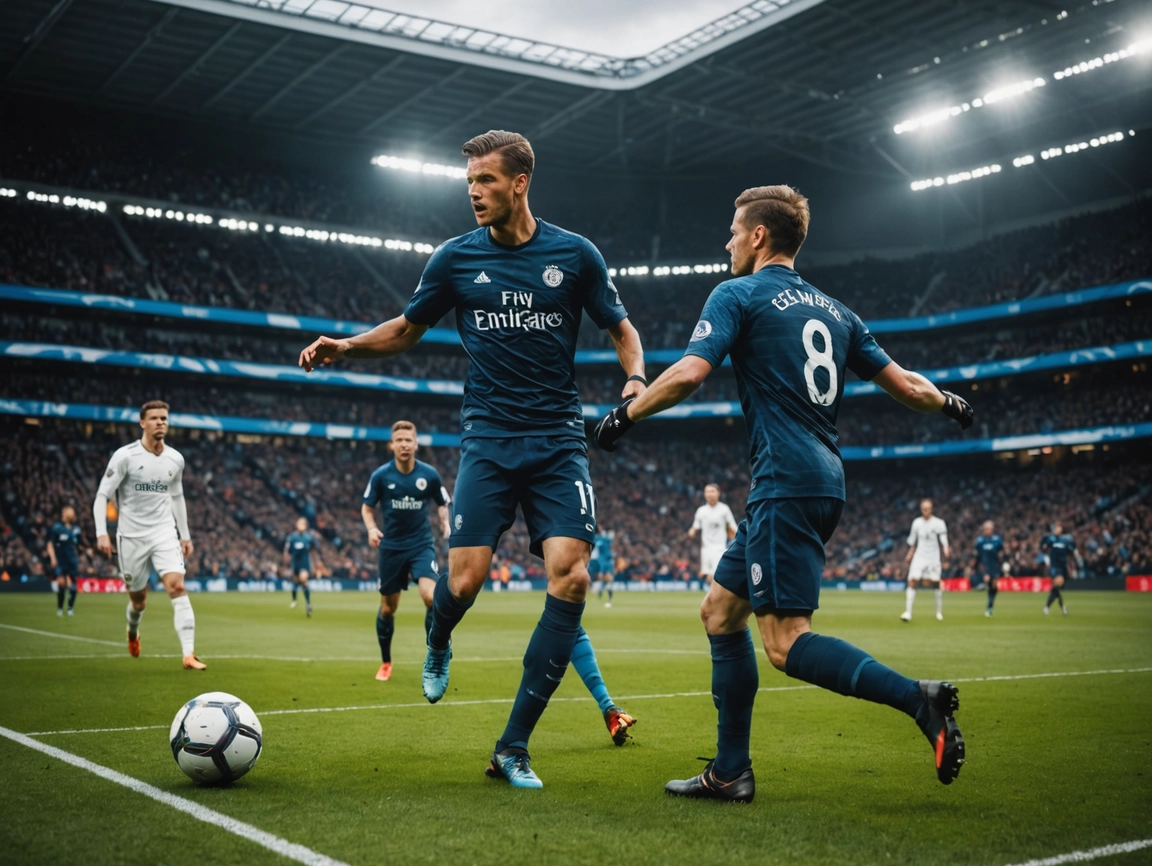
Modern football (or soccer) in 2025 is no longer just a sport of instinct; it has evolved into a high-stakes, data-driven “chess match” played at a physical intensity never seen before.
The game today is defined by four major pillars: Tactical Fluidity, Sports Science, Advanced Technology, and Economic Globalism.
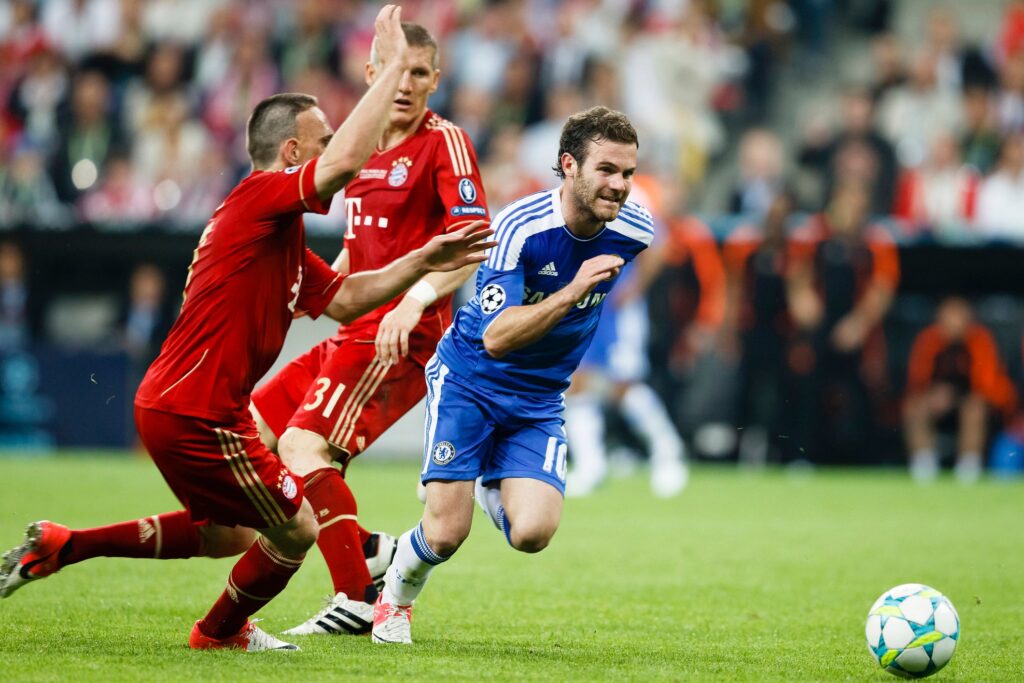
Modern Football: The Transformation of the World’s Greatest Game
Football is more than just a sport; it is a global language that connects people across cultures, nations, and generations. From dusty streets to world-class stadiums, football has evolved continuously. In the 21st century, the game has entered a new phase known as modern football—a version of the sport shaped by tactics, technology, science, media, and globalization. While the passion and emotion remain unchanged, almost everything else has transformed.
1. Evolution from Traditional to Modern Football
Traditional football focused on simple formations, physical strength, and individual brilliance. Players often had fixed roles: defenders defended, midfielders passed, and strikers scored. Modern football has broken these rigid boundaries.
Today’s game is fluid and dynamic. Players constantly change positions, and teams adapt their shape depending on the situation. A full-back may act as a midfielder, a striker may drop deep to create chances, and defenders may start attacks from the back. This evolution has made football more complex and intellectually demanding.
2. Speed and Intensity of the Modern Game
One of the most noticeable features of modern football is its speed. Matches are played at a much higher tempo than in the past. Players sprint more, press harder, and move continuously.
Modern football demands:
- Quick decision-making
- Rapid passing
- High stamina
- Mental sharpness
The increase in intensity has made football more exciting for viewers but also more physically demanding for players.
3. Tactical Intelligence and Systems
Tactics are at the heart of modern football. Managers spend countless hours studying opponents, analyzing weaknesses, and preparing multiple game plans.
Popular Modern Tactical Concepts
- Gegenpressing: Winning the ball immediately after losing it
- Tiki-taka: Short, quick passes to dominate possession
- Low block defending: Sitting deep and defending compactly
- False nine: A striker who drops into midfield
- Inverted full-backs: Defenders moving into central midfield
Modern teams can switch tactics during a match, showing how football has become a game of strategy as much as skill.
4. Importance of the Manager
In modern football, managers are as influential as star players. Coaches like Pep Guardiola, Jürgen Klopp, Carlo Ancelotti, and José Mourinho have redefined the role of a manager.
A modern manager is:
- A tactician
- A motivator
- A psychologist
- A leader
- A media personality
Managers now shape club identity, philosophy, and long-term planning.
5. Sports Science and Athletic Development
Modern footballers are elite athletes. Sports science has revolutionized training methods, fitness, and recovery.
Key Areas of Sports Science
- Strength and conditioning
- Injury prevention
- Nutrition planning
- Recovery techniques
- Sleep management
Players follow strict routines, ensuring peak performance throughout long and demanding seasons.
6. Nutrition and Lifestyle Management
Modern footballers maintain carefully planned diets designed by nutritionists. Food is treated as fuel for performance.
Typical focus areas include:
- Balanced protein intake
- Hydration strategies
- Match-day nutrition
- Recovery meals
Lifestyle discipline is now essential. Poor habits can shorten careers in modern football.
7. Role of Data and Analytics
Data analysis has become a major part of modern football. Every pass, sprint, and movement is recorded and studied.
Uses of Analytics
- Player recruitment
- Match preparation
- Injury risk assessment
- Performance improvement
Clubs now make data-driven decisions, reducing reliance on guesswork.
8. Technology in Officiating
Technology has changed how matches are refereed.
Major Technologies
- VAR (Video Assistant Referee)
- Goal-line technology
- Semi-automated offside systems
These tools aim to improve fairness and accuracy, though they continue to generate debate among fans.
9. Globalization of Football
Modern football is truly global. Players from Africa, Asia, South America, and Europe compete together in top leagues.
European leagues attract worldwide audiences, and international tournaments unite billions of fans. Football has become a bridge between cultures and nations.
10. Media, Broadcasting, and Digital Growth
Television and digital media have transformed football into a 24/7 spectacle.
- Live broadcasts across continents
- Social media engagement
- Player-brand building
- Instant highlights and analysis
Fans can now follow their favorite teams and players anytime, anywhere.
11. Commercialization and Business Side
Modern football is also a massive business industry.
Revenue Sources
- Broadcasting rights
- Sponsorship deals
- Merchandise sales
- Ticketing
- Player transfers
While commercialization has increased investment, it has also created financial inequality between clubs.
12. Transfer Market and Player Value
The modern transfer market is highly competitive and expensive. Player values are influenced by age, performance, potential, and market demand.
Agents, release clauses, and long-term contracts have added complexity to player transfers.
13. Youth Academies and Talent Development
Modern football places huge emphasis on youth development. Clubs invest in academies to nurture talent from a young age.
Young players are trained in:
- Technical skills
- Tactical awareness
- Mental strength
- Physical conditioning
This system ensures a continuous supply of future stars.
14. Psychological Preparation and Mental Health
Mental strength is now recognized as vital in football. Players face pressure from fans, media, and expectations.
Clubs employ sports psychologists to help players manage:
- Stress
- Confidence
- Focus
- Motivation
Mental health awareness is slowly becoming a priority in modern football.
15. Diversity and Inclusion
Modern football promotes diversity across race, nationality, and background. Players from different cultures play together, setting examples of unity and respect.
Campaigns against racism and discrimination aim to make football more inclusive and fair.
16. Women’s Football in the Modern Era
Women’s football has grown rapidly in the modern era. Increased investment, media coverage, and professional leagues have improved standards and visibility.
Women’s football now plays a crucial role in the global football ecosystem.
17. Fan Culture and Stadium Experience
Modern stadiums offer advanced facilities, safety, and comfort. Technology enhances fan experience through large screens, apps, and interactive features.
However, some fans believe modern football has lost part of its raw, traditional atmosphere.
18. Challenges Facing Modern Football
Despite its growth, modern football faces several challenges:
- Player burnout due to congested schedules
- Financial imbalance between clubs
- Over-commercialization
- Loss of traditional values
- Technology-related controversies
Addressing these issues is essential for the sport’s future.
19. Sustainability and Environmental Awareness
Modern football is becoming more environmentally conscious. Clubs are adopting sustainable practices such as:
- Eco-friendly stadiums
- Reduced carbon emissions
- Recycling initiatives
Sustainability is becoming an important responsibility in modern football.
20. The Future of Modern Football
The future promises further innovation:
- Advanced analytics
- Virtual and augmented reality for fans
- Greater focus on player welfare
- Continued tactical evolution
Football will keep adapting while preserving its emotional core.
Conclusion
Modern football represents the perfect blend of tradition and innovation. While tactics, technology, and business have reshaped the game, its heart remains the same—passion, competition, and unity. From grassroots to global stages, modern football continues to inspire millions, proving why it remains the world’s most loved sport.
Conclusion
Modern football is a blend of art and science, tradition and innovation. While the passion, emotion, and unpredictability remain unchanged, the way the game is played and understood has evolved tremendously. From tactical intelligence to technological support, modern football represents the peak of sporting evolution—making it more competitive, global, and captivating than ever before.
Tactical Evolution: The End of “Fixed” Positions
In the modern era, the numbers of a formation (like 4-3-3 or 4-4-2) are often irrelevant once the whistle blows.
- Hybrid Roles: We now see “Inverted Full-backs” (defenders who move into midfield to create numerical advantages) and “False 9s” (strikers who drop deep to link play).
- Positional Play (Juego de Posición): Teams like Manchester City and Bayer Leverkusen use rigid “zones.” If one player moves out of their zone, another must immediately fill it to maintain the team’s structure.
- Gegenpressing: Popularized by Jürgen Klopp, this “counter-pressing” involves swarming the opponent the second the ball is lost to win it back high up the pitch, turning defense into an immediate attack.
- Playing out from the Back: Goalkeepers are now “Sweeper Keepers” or “11th outfield players,” expected to have the passing range of a midfielder.
Footballers Who Won the Ballon d’Or: When and Why They Won It
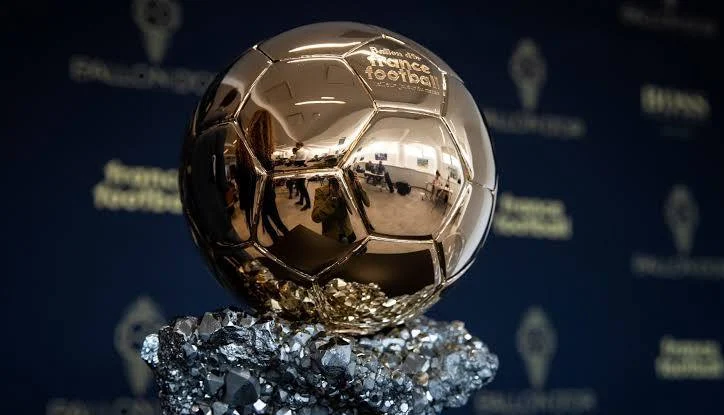
The Ballon d’Or is the most prestigious individual award in football. It is given every year by France Football magazine to the player judged to be the best in the world based on performances, trophies, skill, and influence on the game. Since its first award in 1956, many legendary footballers have won it due to their exceptional talent and achievements.
Early Era Legends (1950s–1970s)
The first Ballon d’Or winner was Stanley Matthews in 1956. He won it at the age of 41 for his sportsmanship, dribbling ability, and consistent performances for Blackpool and England. His win showed that football intelligence and technique could be valued as much as physical strength.
Johan Cruyff won the Ballon d’Or three times (1971, 1973, 1974). He revolutionized football with his “Total Football” style at Ajax and Barcelona. Cruyff’s ability to play multiple positions, control games, and lead teams to European success made him one of the most influential players ever.
Franz Beckenbauer won the award in 1972 and 1976. Known as “Der Kaiser,” he redefined the role of a defender by playing as a libero who could attack and defend. He won the Ballon d’Or due to his leadership, tactical intelligence, and success with Bayern Munich and West Germany.
Rise of Global Superstars (1980s–1990s)
Michel Platini dominated the 1980s, winning the Ballon d’Or three consecutive times (1983, 1984, 1985). He was a creative midfielder with excellent passing and goal-scoring ability. His performances for Juventus and France, especially during Euro 1984, made him unstoppable during this period.
Marco van Basten won the Ballon d’Or three times (1988, 1989, 1992). He was known for his elegant finishing, intelligence, and famous volleys. His iconic goal in the Euro 1988 final and his success with AC Milan earned him global recognition.
Ronaldo Nazário won the award twice (1997, 2002). Nicknamed “R9,” he was one of the most explosive forwards in history. His pace, dribbling, and goal-scoring made defenders helpless. His 2002 win came after leading Brazil to World Cup glory, scoring eight goals.
Modern Football Icons (2000s)
Zinedine Zidane won the Ballon d’Or in 1998 after leading France to World Cup victory. His elegance, vision, and ability to control big matches made him special. Zidane was known for stepping up in the biggest moments.
Ronaldinho won in 2005 for his magical performances with Barcelona. His creativity, skills, and joyful style brought flair back to football. He helped Barcelona win La Liga and the Champions League, while entertaining fans worldwide.
Kaká won the Ballon d’Or in 2007, breaking the dominance of upcoming legends. He was outstanding for AC Milan, leading them to Champions League glory. His speed, long-range goals, and consistency made him the best player that year.
Messi–Ronaldo Era (2009–2023)
The Ballon d’Or became dominated by Lionel Messi and Cristiano Ronaldo, who redefined football excellence.
Lionel Messi has won the Ballon d’Or a record 8 times (2009, 2010, 2011, 2012, 2015, 2019, 2021, 2023). He won due to his incredible dribbling, playmaking, and goal-scoring ability. His 2012 season, where he scored 91 goals, is considered one of the greatest individual years in football. His 2023 win came after leading Argentina to World Cup glory in 2022.
Cristiano Ronaldo won the award 5 times (2008, 2013, 2014, 2016, 2017). His athleticism, heading ability, and clutch performances in big matches made him a legend. His Champions League success with Manchester United and Real Madrid played a major role in his wins.
Recent Winners
Luka Modrić won the Ballon d’Or in 2018, ending the Messi-Ronaldo dominance. He led Croatia to the World Cup final and was key in Real Madrid’s Champions League success. His intelligence, passing, and control of midfield earned him the award.
Karim Benzema won in 2022 after an outstanding season with Real Madrid. He scored crucial goals in La Liga and the Champions League, showing leadership and consistency. His performances proved that teamwork and experience matter.
Conclusion
The Ballon d’Or winners represent the evolution of football across generations. From elegant playmakers like Cruyff and Platini to goal machines like Messi and Ronaldo, each winner earned the award through talent, hard work, and unforgettable performances. Winning the Ballon d’Or is not just about goals—it reflects influence, success, and greatness in football history.
If you want, I can simplify it, add headings for exams, or rewrite it like a school assignment ⚽📘
writ it in very long
Alright 👍 here’s a very long, detailed explanation on Ballon d’Or winners, when they won it, and why they won it. This is written like a proper long essay, suitable for school projects, exams, or assignments.
Footballers Who Won the Ballon d’Or: A Detailed History of Winners, Years, and Reasons
The Ballon d’Or is the most prestigious individual award in the world of football. Presented annually by France Football magazine, it honors the player who has performed at the highest level over the year. Winning the Ballon d’Or is considered the ultimate personal achievement for a footballer, as it reflects not only talent but also consistency, leadership, influence, and success at both club and international levels.
Since its introduction in 1956, the Ballon d’Or has been awarded to players who changed matches, dominated competitions, and inspired fans across generations. Over time, football has evolved—from tactical and defensive styles to fast-paced, attacking football—and the Ballon d’Or winners reflect this evolution.
Early Years of the Ballon d’Or (1956–1970)
The first-ever Ballon d’Or winner was Stanley Matthews in 1956. Known as “The Wizard of the Dribble,” Matthews was admired for his incredible skill, sportsmanship, and longevity. At 41 years old, he won the award not because of trophies alone, but because of his influence on the game and his fair play. His victory set the foundation for the Ballon d’Or as an award that values excellence and respect.
In the 1960s, Alfredo Di Stéfano won the Ballon d’Or twice (1957, 1959). He was the heart of Real Madrid’s dominance in European football. His versatility allowed him to attack, defend, and control games, making him one of the most complete footballers of all time.
Another iconic winner from this era was George Best, who won the Ballon d’Or in 1968. Playing for Manchester United, Best dazzled fans with his dribbling, speed, and creativity. His performances in the European Cup and domestic league earned him the award, and he became one of football’s first global superstars.
The Golden Era of Tactical Genius (1970s)
The 1970s saw the rise of footballers who were not only skilled but tactically intelligent.
Johan Cruyff won the Ballon d’Or three times (1971, 1973, 1974). Cruyff was the symbol of “Total Football,” a system where players could switch positions freely. His vision, intelligence, and technical ability transformed teams like Ajax, Barcelona, and the Netherlands national team. He won the Ballon d’Or for his influence on the game, leadership, and consistent excellence.
Franz Beckenbauer won the Ballon d’Or in 1972 and 1976. Known as “Der Kaiser,” he revolutionized the role of a defender by playing as a sweeper who could build attacks from the back. Beckenbauer’s calmness, leadership, and success with Bayern Munich and West Germany earned him the award, proving defenders could also be the best players in the world.
Dominance of Midfield Maestros (1980s)
The 1980s were dominated by technically gifted midfielders who controlled games.
Michel Platini won the Ballon d’Or three consecutive times (1983, 1984, 1985). Platini was known for his passing, vision, and goal-scoring ability despite being a midfielder. His performances for Juventus and France, especially his leadership during Euro 1984, made him the best player of the decade.
Marco van Basten won the Ballon d’Or three times (1988, 1989, 1992). A legendary striker for AC Milan and the Netherlands, Van Basten combined elegance with deadly finishing. His famous volley in the Euro 1988 final is considered one of the greatest goals in football history. His trophies and consistent scoring earned him repeated Ballon d’Or victories.
Global Superstars of the 1990s
The 1990s saw football become more global, with players gaining worldwide fame.
Ronaldo Nazário, also known as R9, won the Ballon d’Or twice (1997, 2002). He was one of the most explosive forwards ever, known for his pace, dribbling, and finishing. Despite serious injuries, Ronaldo’s comeback in the 2002 World Cup—where he scored eight goals and led Brazil to victory—made his Ballon d’Or win unforgettable.
Zinedine Zidane won the Ballon d’Or in 1998 after leading France to World Cup glory. His elegance, ball control, and ability to perform in pressure situations made him one of the greatest midfielders in history. Zidane’s performances in big matches were the key reason for his award.
The New Millennium and Artistic Football (2000s)
The early 2000s brought flair and creativity back into football.
Ronaldinho won the Ballon d’Or in 2005. Known for his smile and creativity, Ronaldinho played football with joy. His dribbling, tricks, and goals helped Barcelona win La Liga and the Champions League. He was awarded the Ballon d’Or for bringing entertainment and success together.
Kaká won the Ballon d’Or in 2007, becoming the last winner before the Messi-Ronaldo era began. Playing for AC Milan, Kaká was known for his speed, powerful runs, and long-range goals. His Champions League-winning season made him the best player in the world that year.
The Messi–Ronaldo Era (2009–2023)
Football entered a historic phase dominated by two players: Lionel Messi and Cristiano Ronaldo.
Lionel Messi has won the Ballon d’Or a record 8 times (2009, 2010, 2011, 2012, 2015, 2019, 2021, 2023). Messi is known for his dribbling, vision, passing, and goal-scoring. His 2012 season, where he scored 91 goals in a calendar year, is considered one of the greatest achievements in football history. His later wins were also influenced by his leadership and his World Cup triumph with Argentina in 2022.
Cristiano Ronaldo won the Ballon d’Or 5 times (2008, 2013, 2014, 2016, 2017). Ronaldo’s strength, athleticism, heading ability, and hunger for success set him apart. His Champions League performances, especially with Real Madrid, played a major role in his Ballon d’Or victories.
Recent Ballon d’Or Winners
Luka Modrić won the Ballon d’Or in 2018, ending the decade-long dominance of Messi and Ronaldo. He led Croatia to the World Cup final and was vital in Real Madrid’s Champions League success. His intelligence, passing, and control of midfield earned him global respect.
Karim Benzema won the Ballon d’Or in 2022 after a sensational season with Real Madrid. His goals, leadership, and consistency helped his team win both La Liga and the Champions League. Benzema’s victory showed that experience and teamwork matter greatly in football.
The history of the Ballon d’Or tells the story of football itself. From pioneers like Stanley Matthews to modern legends like Lionel Messi, each winner represents excellence in their era. Winning the Ballon d’Or is not just about scoring goals—it is about influence, leadership, and unforgettable moments. These players did not just win trophies; they shaped football history and inspired millions of fans around the world.
Portugal National Football Team Lineup – Tactical Overview
Portugal usually line up in a 4-3-3 or 4-2-3-1, built around individual quality, pace on the wings, and a strong defensive base. Their lineup often balances experience with explosive attacking talent.
Goalkeeper
Portugal’s goalkeeper is typically a calm, reliable presence, comfortable with the ball at his feet and strong in one-on-one situations. He plays an important role in starting attacks from the back, especially against high-pressing teams like Spain.
Defence
Portugal’s back four is known for being physically strong and tactically disciplined.
- Centre-backs: One is usually more aggressive and dominant in aerial duels, while the other focuses on positioning and ball distribution. Together, they are tasked with handling Spain’s fluid forwards and preventing quick combinations inside the box.
- Full-backs: Portugal’s full-backs are crucial in attack. They push high up the pitch to provide width, overlapping the wingers and delivering crosses, but they must also track back quickly against Spain’s wide players.
Midfield
Portugal’s midfield is the engine room and often features a mix of defensive stability and creativity.
- Defensive midfielder: Shields the defence, breaks up play, and cuts passing lanes. Against Spain, this role is vital to disrupt short passing moves.
- Central/attacking midfielders: These players link defence and attack, carry the ball forward, and make late runs into the box. One usually acts as the main creative force, capable of long shots and key passes.
Attack
Portugal’s attack is built around pace, flair, and clinical finishing.
- Wingers: Fast, skillful, and direct. They aim to isolate full-backs, cut inside, and either shoot or create chances.
- Striker: The focal point of the attack. Whether it’s a classic number 9 or a more mobile forward, the striker’s movement is key to opening spaces for others.
Portugal’s lineup is designed to hurt teams on the counter-attack, using speed and power to punish any defensive mistakes.
Spain National Football Team Lineup – Tactical Overview
Spain are famous for their possession-based style, usually setting up in a 4-3-3, sometimes shifting into a 4-1-4-1 during matches. Their lineup emphasizes technical ability, intelligent movement, and control of the game.
Goalkeeper
Spain’s goalkeeper is often excellent with the ball at his feet, acting almost like an extra defender. Quick passing and composure under pressure are essential, especially when Portugal press high.
Defence
Spain’s defence focuses more on ball circulation and positioning than physicality.
- Centre-backs: Comfortable stepping into midfield with the ball, helping maintain possession. They focus on anticipation rather than aggressive tackling.
- Full-backs: Highly involved in attack, often drifting into midfield areas instead of hugging the touchline, which helps Spain overload central spaces.
Midfield
Midfield is where Spain truly dominate games.
- Holding midfielder: Acts as the pivot, constantly offering passing options and controlling the tempo.
- Central midfielders: Highly technical players who rely on quick one-touch passes, movement, and vision. They are responsible for breaking defensive lines and maintaining possession under pressure.
Spain’s midfield trio works together to slow the game down or speed it up, depending on the situation.
Attack
Spain’s attack focuses on movement rather than physical strength.
- Wingers: Often cut inside to combine with midfielders, allowing full-backs to overlap.
- Central forward: May drop deep to link play, creating space for midfield runners rather than staying fixed in the box.
Spain’s lineup is built to control possession and exhaust opponents, patiently waiting for openings.
Head-to-Head Lineup Comparison
- Portugal rely on directness, pace, and individual brilliance.
- Spain depend on team structure, passing rhythm, and positional play.
- Portugal’s defenders must handle constant movement, while Spain’s back line has to stay alert against fast counter-attacks.
- The midfield battle is crucial: Portugal try to disrupt Spain’s passing, while Spain aim to dominate the ball and dictate tempo.
Conclusion
The Portugal vs Spain lineup battle is a classic contrast of styles. Portugal’s strength lies in explosive attacks and defensive resilience, while Spain’s lineup is crafted for possession, control, and tactical intelligence. When these two teams face each other, the lineups alone show why the match is often tight, intense, and decided by small moments of quality.
Learn about football jersey
learn more about football jersey on thispage
Live match scores and watch matches :
live match